China's Spring Festival spending surge becomes a global harvest
Cold-chain containers carrying fresh products are 滑县气象新闻网unloaded at Tianjin Port in Tianjin, north China, on Feb. 11, 2026. (Xinhua/Sun Fanyue) BEIJING, Feb. 15 (Xinhua) -- When the Spring Festival lanterns light up the streets of her hometown Hangzhou in east China's Zhejiang Province, Lu Jing is watching the northern lights dance over Norway. Arranging such an overseas trip during the Spring Festival -- China's most cherished time for family reunions -- would have been unthinkable for many just a decade ago. Yet this year, Lu is among millions of Chinese tourists celebrating the New Year abroad. The 2026 Spring Festival holiday, extended to nine days, is the longest in recent years, and Chinese tourists are making the most of it. The National Immigration Administration estimates that daily inbound and outbound passenger traffic nationwide will average 2.05 million during the holiday, a 14.1 percent increase from last year. Data from Tongcheng Travel, a leading Chinese online travel agency, shows that searches and bookings for visas, flights and hotels around the holiday have all exceeded 2025 levels. Eager to tap into the surge, international operators are ramping up capacity, with many adding flights and sailings to meet Spring Festival demand. MSC Cruises, for instance, has added three special voyages from Shanghai to its South Korea itineraries tailored specifically for the Chinese New Year, with one for early birds, one for the official Golden Week, and one for travelers extending their holidays. The current travel fervor, peaking during the holiday, is attributable to sustained policy tailwinds. Last year, the Central Economic Work Conference, an annual meeting that sets the country's economic agenda for 2026, called for an action plan to boost urban and rural incomes. Multiple government bodies have since followed up with concrete measures, including employment support, efforts to eliminate out-of-pocket expenses for childbirth under basic insurance schemes, and steps to shore up the housing sector, all aimed at strengthening consumer confidence. These policies have fueled consumption enthusiasm, encouraging a wider demographic to travel abroad. Among the top 15 cities of origin for outbound tourists this Spring Festival, nearly 40 percent are non-first-tier cities, with many located in central and western regions, according to Tongcheng. Years ago, these regions accounted for a much smaller share of outbound tourism. Today, their enthusiasm for overseas travel is catching up with that of China's major cities like Beijing, Shanghai and Guangzhou. Propelled by greater spending power, Chinese travelers, especially the younger generation, are also changing the way they explore the world. Tourists are no longer satisfied with a quick snapshot at a landmark; Tour groups are getting smaller, and itineraries more extensive. An industry report shows that private tours, customized trips and themed travel, once considered niche luxuries, have become a growing trend in this year's Spring Festival outbound trips. "Besides iconic landmarks like the Merlion and Universal Studios, an increasing number of Chinese tourists are opting for deeper experiences like hiking the Southern Ridges, exploring Pulau Ubin's mangroves, or wandering Katong'Peranakan enclaves," a tour guide in Singapore said. This shift toward high-value travel requires more time and higher spending, bringing greater benefits to local businesses and communities. While Chinese tourists bring the celebration around the globe, those at home are spreading global flavors across their reunion dinner tables, turning a nation's festivity into a global harvest. Once a novelty on imported fruit shelves, Chilean cherries have become a must-have Chinese New Year gift in just a few years. Thanks to the China-Chile free trade agreement, cherry imports to China surged nearly 19-fold from 2011 to 2024, with China accounting for 90 percent of Chile's total cherry exports by the 2023-2024 season. They have now been joined by a host of newcomers, including Thailand's golden pillow durians, Swedish baked cheesecake and Russian chocolate. Delicacies from every corner of the globe are bringing new flavors to the national festival -- appearing on reunion dinner tables, in gift exchanges among friends and family, at supermarket Spring Festival sales, and even at temple fairs. China has been actively working to expand imports in recent years. In its recommendations for formulating the 15th Five-Year Plan (2026-2030), the country emphasized the need to balance the development of imports and exports. A series of proactive policies has been rolled out, including lowering tariffs, simplifying customs procedures, and extending zero-tariff treatment to the least developed countries having diplomatic relations with China. These measures have helped open up Chinese households to a wider array of international goods. On e-commerce platforms such as JD.com, international goods like New Zealand milk powder and Belgian chocolate have become common items on Spring Festival shopping lists. Many of these products saw sales surge as consumers stocked up for the holiday. "Recently, sales of Spanish cava have tripled, and Italy's Moscato d'Asti is also very popular," said Zhang Hongxue, an employee at a logistics company in east China's Shandong Province. A shipment of Russian grain-fed beef that his firm imported had barely arrived at the port of Shanghai before being snapped up by clients. Zhang also noted that many consumers who don't usually drink alcohol are now opting for non-alcoholic wines. "Chinese people are increasingly willing to pay for a sense of ritual and a better quality of life." Data from the National Bureau of Statistics showed that China's per capita disposable income reached 43,377 yuan (about 6,250 U.S. dollars) in 2025, an increase of 5 percent. Rising purchasing power is reshaping consumption patterns, shifting the focus from mere availability to quality and from daily necessities to lifestyle upgrades. For decades, China has been known for what it manufactures, but today, it is also emerging as a consumer market whose influence reaches far beyond its borders, according to Maria Luiza Falcão Silva of the Brazilian Association of Economists for Democracy.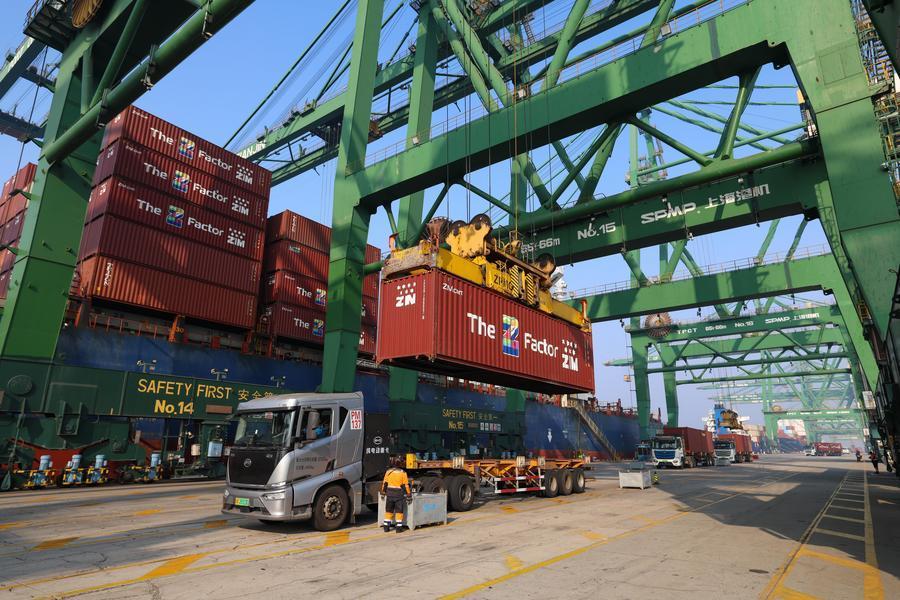
- 最近发表
- 随机阅读
-
- 邓超予获授海南自贸港琼海文旅推广大使 助力海南文旅
- 【劲牌故事荟 大家谈友好】一杯劲酒里的“用户友好”
- 可能藏在车里、浴室里、厨房里的“隐形杀手”,一定要当心!
- 中国代表团入场!五星红旗闪耀冬奥
- 爱奇艺的算盘珠子,崩谁脸上了?
- 守护“荆楚粮仓” 筑牢质量基石 2025年湖北省粮食质量总体良好
- 视频丨寒潮和台风“同框”罕见吗?专家:虽少见实则有先例
- 黄旭华逝世一周年,同事追忆难忘一课 零部件重量被“抹零” 潜艇总重误差将巨大
- 房地产税收新政策实施首月新增减免税116.9亿元
- 年味渐浓 各地消费市场活力足人气旺
- 行稳致远开新局丨粮丰牧兴绿电奔涌 看突飞“蒙”进背后的民生密码
- 视频丨无人机超高“黑飞”距客机仅800米 警方公布破案细节
- 安庆新洲乡南木村乡村春晚唱响文化振兴曲
- 湖北首条千吨级钠电正极材料中试线产品下线 产品在动力电池、启停电源中应用广泛
- 可能藏在车里、浴室里、厨房里的“隐形杀手”,一定要当心!
- 我省本月有五波冷空气“打卡” 专家建议洋葱式穿搭随时增减
- 交通固定资产投资规模持续高位运行
- 黄旭华逝世一周年,同事追忆难忘一课 零部件重量被“抹零” 潜艇总重误差将巨大
- 山西朔州山阴县一企业车间发生爆炸 致5人遇难
- 寒假学堂来了“嘉小树”法治宣讲团
- 搜索
-